Reading
Intent
At East Hunsbury Primary School (EHPS), we are leading the evolution of reading for our community. We are dedicated to fostering a vibrant reading culture that empowers our students to become confident, fluent, and insightful readers. Our vision is to equip every child with the skills and passion for reading that will enrich their lives, both now and in the future.
Our Core Intentions:
-
Diverse Literary Exploration: We aim to expose our students to a rich tapestry of literature, encompassing graphic novels, classic texts, magazines, comics, poetry, and contemporary stories.
-
Deep Comprehension and Critical Engagement: We strive to develop students' ability to understand, evaluate, reflect, compare, and critique literature, enabling them to engage in meaningful discussions and form informed opinions.
-
Reading for Pleasure and Learning: We cultivate a genuine love for reading, encouraging students to choose reading as a source of enjoyment and knowledge acquisition.
-
Inclusive and Representative Literature: We ensure that every child sees themselves reflected in the books they read, providing both "windows" to diverse experiences and "mirrors" to their own, as inspired by Emily Style's "Curriculum as Window and Mirror."
-
Reading as a Foundation for Learning: We embed reading across our curriculum, recognizing its crucial role in strengthening core knowledge and developing students emotionally, culturally, socially, and spiritually.
Our Aims – every child a reader with agency
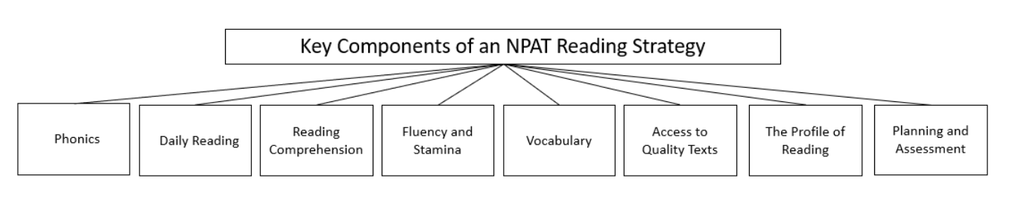
Our reading curriculum is designed to achieve the highest standards of literacy while nurturing a lifelong appreciation for literature. Our aims, built around NPAT’s Key Components, are to develop readers with agency, who:
-
Read easily, fluently and with good understanding
-
Choose to read widely and often for both pleasure and information
-
Understand what they read by drawing on a range of strategies including grammar, illustrative and knowledge of linguistic conventions
-
Increase their vocabulary
-
Have access to a variety of the finest literature which challenges and engages
-
Understand the role of reading and literature on their lives and wider society
-
Engage in discussion in order to learn, deepen their thinking and form opinions
-
Use their reading to influence their writing
By placing reading at the heart of our school, we are committed to nurturing a community of lifelong learners who are empowered by the transformative power of literature.
Implementation
Reading starts on day 1 when they join East Hunsbury Primary School.
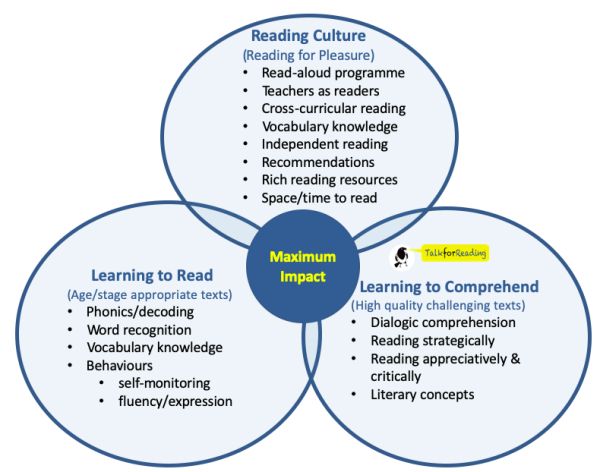
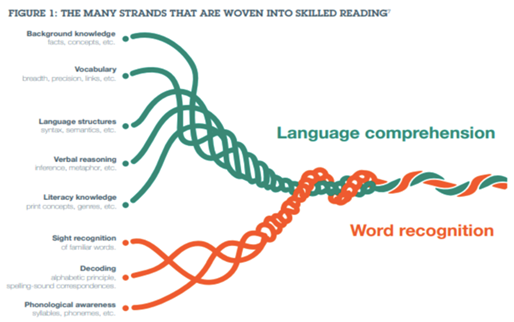
At East Hunsbury Primary School, we have designed our reading curriculum around the two core strands as outlined in the Scarborough Reading Rope: Word Recognition and Language Comprehension, in order to teach our children to read. We have also considered carefully the culture in which reading sits in order to ensure maximum impact which is reflected in our reading Venn diagram.
Word Recognition and Early Reading
To develop children’s ability to recognise and decode words, we use the linguistic phonics programme Sounds-Write as our implementation strategy. The Sounds-Write approach is based on the sounds in speech and moves to the written word. It focusses on what the learner needs to understand about the English alphabet code in order to become a fluent reader (and speller) of English e.g. the
-
conceptual knowledge they require
-
alphabet code knowledge they require
-
skills they need to employ the conceptual and alphabet code knowledge.
This approach also marries with our writing strategy by promoting encoding at the same time as decoding.
 |
|
Children in EYFS and KS1 receive a daily 30-minute phonics session and a minimum of 2 small group reading sessions using a decodable text. The lowest 20% are monitored and carefully assessed with timely and appropriate interventions being put in place such as pre-teaching. They are also heard read more frequently.
Every child has access to a phonetically decodable book which is suitable for their reading attainment as well as a reading for pleasure book. These books are routinely monitored by the class teacher.
Sounds-Write diagnostic assessments are regularly undertaken with identified children to ensure that we are adapting our teaching to meet the needs of the learners.
Building Reading Bridges: From Decoding to Deep Engagement
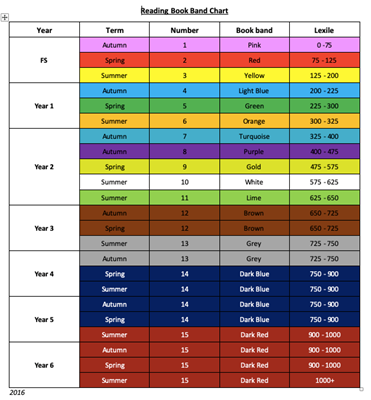 As children gain confidence in applying phonics knowledge, we introduce "bridging books" alongside their phonics texts, starting at the green level.
These books serve as crucial stepping stones, transitioning children from decoding individual sounds to navigating longer, more complex narratives.
Our Bridging Book Goals:
-
Develop Fluency and Automaticity: Bridging books enable children to apply their phonics skills to extended texts, fostering fluency and automaticity in reading.
-
Introduce Chapter Books and Authors: We aim to ignite a passion for reading by exposing students to engaging chapter books and real authors, showcasing the joy and power of stories.
-
Promote Reading Independence: These books are carefully selected to cultivate independent reading habits and a lifelong love of literature.
-
Offer Diverse and Inclusive Choices: Our banded bridging books draw from a variety of publishers and schemes, ensuring a rich and diverse reading experience. We prioritise inclusivity, allowing students at different stages, even in upper years, to access texts that match their maturity and reading level.
-
A Gradual Transition: as children progress, their reliance on phonics books gradually decreases, and they transition fully to bridging books. Eventually, they will confidently move beyond these, becoming independent, enthusiastic readers.
Developing Deep Comprehension: The Talk for Reading Approach
At East Hunsbury Primary School, we empower students to become insightful readers through the Talk for Reading approach. This research-based strategy moves beyond discrete skills, fostering robust comprehension strategies that enable students to independently and deeply understand texts. As Wayne Tennent emphasises, "As teachers, we need to deliberately and explicitly teach reading strategies that support the comprehension of a text.
Key Features of Talk for Reading:
-
Dialogic Comprehension: Talk for Reading strengthens our Oracy curriculum by emphasising dialogic comprehension – talking and thinking our way to understanding, cultivating deep thinking as a habit of mind.
-
Aiden Chambers' "Tell Me" Approach: We integrate Aiden Chambers' "Tell Me," approach.
-
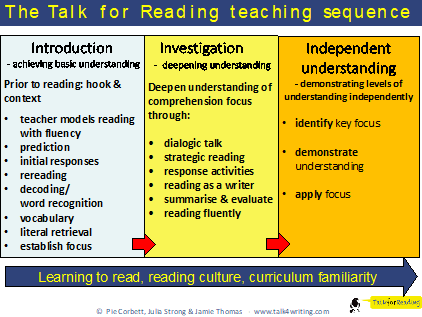
Structured Learning Process: The Talk for Reading process follows three stages: Introduction, Investigation, and Independent Understanding, guiding students from surface-level to profound comprehension.
-
Ambitious Text Selection: We prioritise high-quality, ambitious texts, carefully evaluated for their teaching potential.
Implementation and Coverage
Over a half-term, we ensure comprehensive reading development through:
-
Completion of a Talk for Reading Unit
-
Dedicated ‘Test Readiness’ activities.
-
Regular Reading for Pleasure (RfP) opportunities.
-
Daily class story time.
-
Daily 30-minute phonics sessions (EYFS and KS1).
Vocabulary
At EHPS, we prioritise vocabulary development across all subjects, employing explicit and contextual teaching strategies informed by Isabel L. Beck's 'Bringing Words to Life.' Our staff receive targeted training to ensure effective vocabulary instruction." We also use WellComm and Neli to support our assessment and teaching of this important area.
Impact
By the culmination of our reading curriculum, we aim to have empowered our students to transition seamlessly from, "learning to read," to, "reading to learn." They will possess the fluency and comprehension necessary to navigate complex texts, engage in insightful literary discussions, and wield a rich vocabulary, particularly Tier 2 words, enabling them to articulate their thoughts with precision.
Students' reading development and engagement will be showcased through:
-
Reading Response Books (KS2): Capturing thoughtful reflections and analyses.
-
Vibrant Learning Environments: Reflecting a positive reading culture and ongoing, impactful teaching practices.
Reading will be assessed through the use of:
-
The independent understanding task(s) based around a BIQ (Big Investigative Question) which is completed by pupils at the end of each unit and teachers use this to assess the impact of the teaching (these will be recorded in reading response books).
-
Whole school and cluster reading moderation led by teachers in school one.
-
NTS termly reading assessments, results are then inputted onto our Insight Tracking System during the academic year to measure outcomes.
-
Year 2 and Year 6, TAF (teacher framework) and exemplification documents are used as a reference during the in-school moderation of these specific year groups.
-
Year 6, in order to be ‘test ready’, will complete past papers – teachers will analyse these results to design next steps and teaching priorities.
-
Quality Assurance of reading is completed by the reading lead alongside class teachers during data entry times.
-
The reading lead, and other senior leaders, will regularly hear children across the school read.
-
York Assessment of Reading Comprehension (YARC) for early readers and children being considered for the Herts for Learning fluency intervention.
-
Sounds-write diagnostic assessments.
-
Pupil voice and surveys will help us determine how the children perceive and value reading at EHPS.
At East Hunsbury, we are committed to ensuring assessment is a dynamic and impactful tool for driving teaching and learning. We will continuously refine our reading assessment practices to guarantee they provide timely and relevant data, enabling us to effectively advance student progress.
The Reading Lead, in partnership with Phase Leaders, will foster a collaborative environment, offering personalised support to all staff to enhance their assessment practices. We will proactively identify support needs through:
-
Skills audits
-
Team meetings
-
Staff and pupil surveys
-
Learning walks
-
Monitoring systems
-
Analysis of student work (books and classroom displays)
This comprehensive approach will ensure ongoing improvement and maintain high standards across our reading curriculum.
Our reading curriculum at EHPS is thoughtfully sequenced to ensure cumulative learning, where students consistently revisit and build upon substantive knowledge, while distributive knowledge is seamlessly integrated throughout. We strategically select texts that not only enhance reading skills but also reinforce and expand knowledge within the Trust's Wider Curriculum.
In text selection, we are mindful of Doug Lemov's "5 Plagues" (archaic language, non-linear time sequences, narrative complexity, figurative/symbolic text, and resistant texts), ensuring students are equipped to navigate these potential obstacles.
Promoting Representation and Balance:
We prioritise inclusivity, ensuring all students see themselves reflected in the literature they encounter. Our curriculum maintains a careful balance between classic and modern texts, providing a rich and diverse reading experience.
Early Years and Key Stage 1 Adaptations:
In EYFS and Year 1, recognising the emphasis on phonics and word recognition, we focus on oral comprehension through carefully chosen picture books.
Unit Medium Term Planning
 |
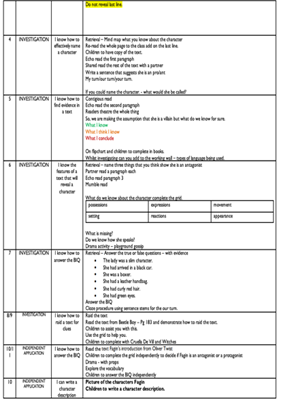 |
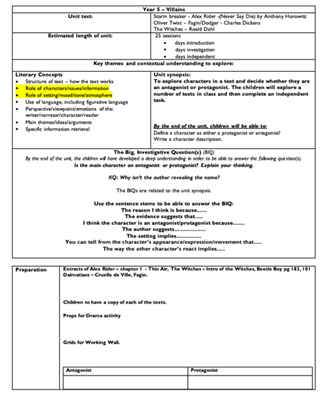
The medium-term plans provide comprehensive overviews of every unit with reference to each aspect of the Talk for Reading process with a link to the texts and wider curriculum where appropriate. These have either been prepared for staff by expert teachers or written in collaboration to reduce teachers’ workload, ensure progression and support with staff subject knowledge. Note that whilst this planning is a support tool, teachers are encouraged to adapt, by adding to it, it in light of the formative assessments.
Core Reading Spine
Our reading and writing curricula are anchored by a carefully curated reading spine, providing daily read-alouds and opportunities across diverse genres. In alignment with research highlighting the transformative power of Reading for Pleasure, we are committed to nurturing a school-wide culture that champions books and cultivates lifelong readers. This spine is regularly reviewed and adapted but an example is below (for the most up to date version, please contact the reading leader).
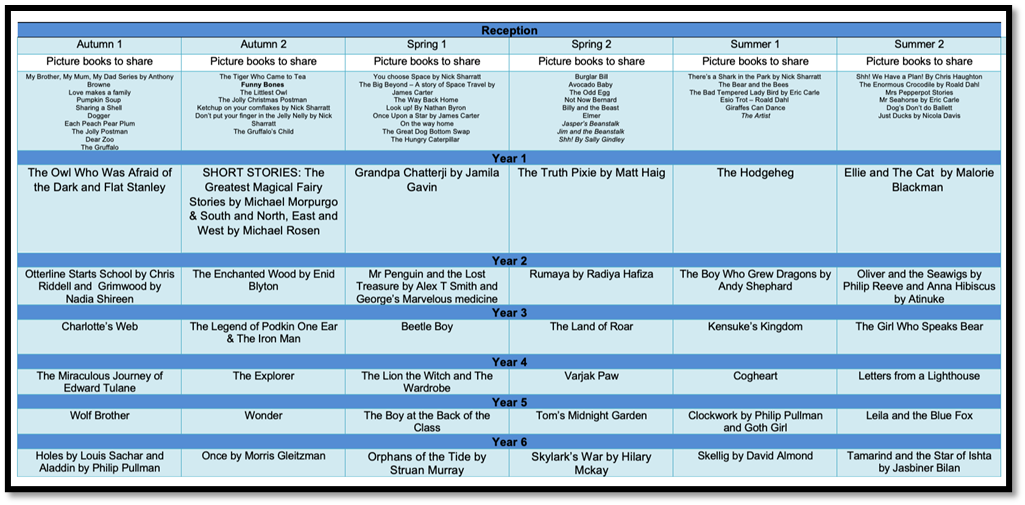
To truly lead the evolution of reading for our community, we immerse our children in a rich tapestry of literary experiences. This includes engaging with visiting authors and illustrators, celebrating World Book Day, having our own RED (Read Every Day) October, collaborating with the Royal Shakespeare Company, and fostering a love for sharing stories through book clubs, book swaps, and cross-age reading opportunities.
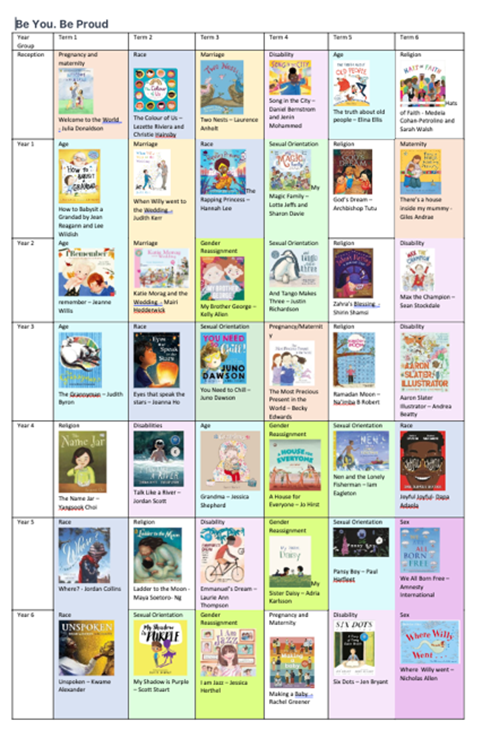
We further enrich our reading culture with targeted reading spines: Protected Characteristics, British Values, and the EHPS 100 Reads. This curated collection of 100 exceptional books challenges and inspires students to broaden their horizons before leaving EHPS.
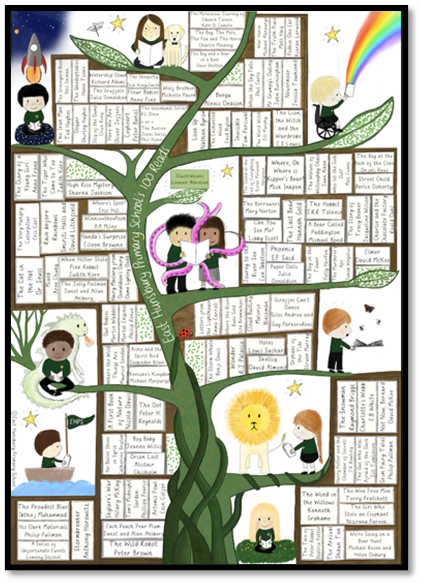


At East Hunsbury Primary School, we believe that every child should see themselves reflected in the books they read and learn about the diverse world around them. Our Protected Characteristics Reading Spine has been carefully curated by members of the English and Pastoral teams to ensure that each text aligns with one or more of the nine protected characteristics under the Equality Act.
The books were chosen to be age-appropriate, engaging, and thought-provoking, offering opportunities for children to explore themes of identity, inclusion, and respect. Through these texts, we aim to foster empathy, celebrate diversity, and promote a culture of equality across our school community.