Mathematics
Intent
The national curriculum states: ‘Mathematics is an interconnected subject in which pupils need to be able to move fluently between representations of mathematical ideas.’ Therefore, we intend that our mathematics curriculum is: aspirational, enabling and inclusive whilst ensuring that all children, by the end of Key Stage 2, become confident, capable mathematicians. We intend our pupils to leave their primary education with a secure and flexible understanding of mathematics and are able to transfer this knowledge to their daily lives; thereby, enabling them to navigate wider society successfully, now and in the future.
We intend every child to experience success through the careful and incremental development of fluency and mathematical concepts within our mathematics curriculum. It is our intention that, throughout curriculum, children’s mathematical thinking will be challenged and pupils will gain a deep understanding of the concepts they are learning. It is our intention that children at East Hunsbury will possess a positive mindset surrounding their maths capabilities and understand the role mathematics plays in our society.
The intention of our maths curriculum is:
-
To teach ambitious, high-quality maths lessons using the Maths Mastery approach
-
To teach a carefully sequenced curriculum which begins in the Early Years and builds on pupils’ existing knowledge - enabling them to continually develop their mental schema
-
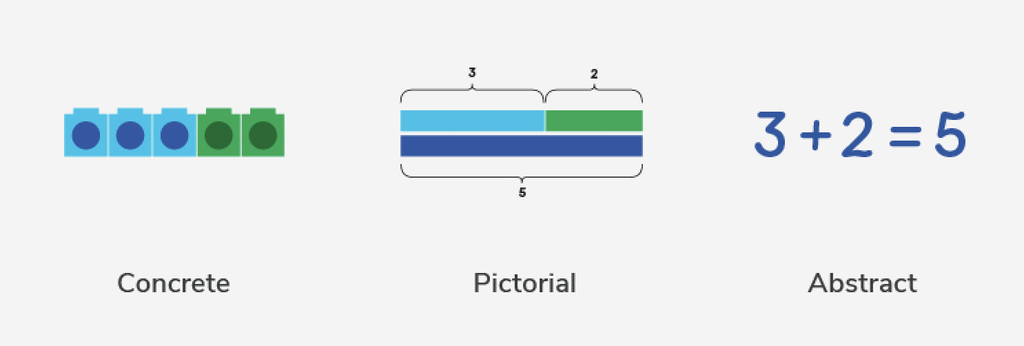
To introduce mathematical concepts using a: ‘Concrete, Pictorial and Abstract’ (CPA) approach which enables pupils to use physical and visual aids to build their understanding of an abstract concept
-
To develop pupils’ fluency in mathematics so they can recall and apply knowledge efficiently, rapidly and accurately and to consolidate this understanding through the use of conceptual and procedural variation
-
To develop pupils’ ability to reason and problem solve mathematically
-
To equip pupils with the confidence, critical thinking skills and resilience required to approach increasingly sophisticated mathematical problems in a logical and systematic way
-
To equip pupils with sentence stems and accurate vocabulary thus enabling them to communicate their mathematical ideas with accuracy and clarity
-
To provide challenge for all pupils through deepening their understanding
-
To inspire our pupils’ love and enthusiasm for mathematics
-
To equip pupils with the mathematical knowledge and skills required for their future

We intend for the pupils at East Hunsbury Primary School to leave our school with an enjoyment and enthusiasm for maths that will stay with them throughout their lives and with the mathematical knowledge and skills they need to empower them for the future.
Implementation Overview
At East Hunsbury Primary School, we deliver an ambitious, sequential maths curriculum using the Maths Mastery approach. This research-based approach ensures pupils acquire a deep, long-term, secure and adaptable understanding of mathematics. Maths is taught daily.
Impact
The impact of the maths curriculum at East Hunsbury Primary School is that pupils will leave our school with a secure, deep and adaptable understanding of mathematics. They will understand the relevance and importance of their mathematical learning and be able to apply their knowledge and skills to all aspects of their everyday life.
Pupils will meet age-related expectations in maths unless they have a significant barrier to their understanding and learning.
The impact of our maths curriculum will be assessed through:
-
Formative assessment: Teachers carry out formative assessment in each lesson and feedback is given to children verbally, through self/peer assessment and through marking. Teachers use this assessment to inform their teaching and to identify pupils requiring further support through interventions.
-
Summative assessment: Termly assessments are completed using the NTS test resources or past SATs papers. Data is collated three times a year and is analysed by the teachers, maths leads and senior leaders in order to assess learning and progress throughout the year. Results are analysed and used to inform and prioritise next teaching steps.
-
Interventions: Pupils receive targeted support though small-group and individual interventions to ensure every child succeeds. These timely interventions offer structured targeted support which has been identified through the analysis of summative and formative assessment data. One of the interventions that we use is called Shine and is directly linked to assessing the areas for development identified from the summative NTS assessments.
-
Subject monitoring: The impact of our maths curriculum is regularly monitored through targeted learning walks, pupil voice, teacher voice, professional dialogue and book scrutiny.
-
Fluent recall: Pupils complete regular fluency recall tests through Number Sense, Fluent in Five and Times Table quizzes.

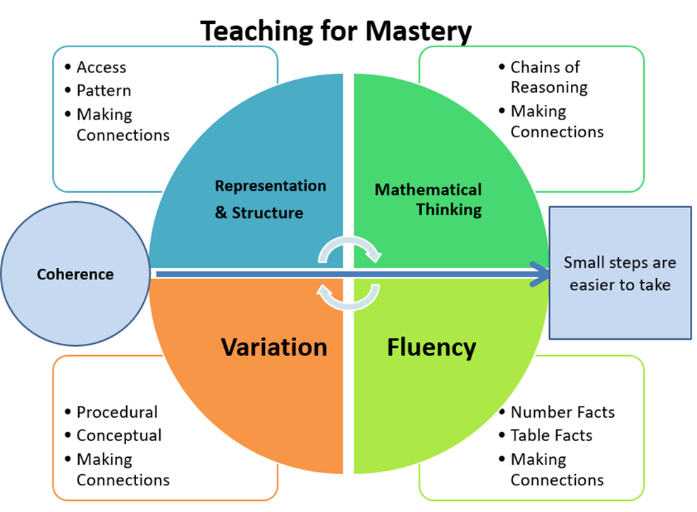
Our maths curriculum encompasses the following key elements of teaching mastery: mathematical thinking, fluency, variation, representation and structure and small steps teaching.
Early Years
Our curriculum begins in the Early Years where pupils are fully immersed into the world of maths through a rich Early Years curriculum. This curriculum exposes pupils to number and integrates maths into their daily life through frequent and varied opportunities. Manipulatives and representations are used to develop a secure base of knowledge, vocabulary and understanding of mathematical concepts. Pupils develop positive attitudes and a passion towards mathematics which continues across the school.
Building on from the Early Years
Long-Term planning follows the National Curriculum and plots the journey for each academic year; quality planning resources from NCETM and White Rose Maths are used to support teachers planning. Medium-Term planning plots the sequence of small steps in the learning of mathematical concepts and exposes the relationship between them.
Daily maths lessons are planned with the understanding that substantive and disciplinary knowledge is a continuum and builds upon secure prior knowledge. Learning is broken down into small, sequential steps which enable pupils to build their understanding of a mathematical concept; new learning builds upon secure prior knowledge and understanding so that pupils develop and enhance their mental models as they move through our maths curriculum, linking their understanding horizontally and vertically across the maths curriculum and diagonally across the whole primary curriculum.
Our daily maths lessons incorporate the use of stem sentences to promote oracy in maths across the school. These highly structured sentences include the use of accurate mathematical vocabulary which is carefully sequenced to ensure progression. Stem sentences provide a scaffold for pupils and enables them to be confident mathematicians who use full sentences to explain their mathematical thinking and enables them to communicate their ideas with mathematical precision and clarity.
The maths curriculum at East Hunsbury Primary School uses a ‘Concrete, Pictorial and Abstract’ approach whereby pupils use physical and visual aids to facilitate their developmental understanding of an abstract concept. Manipulatives are used so pupils can see the structure of the mathematics and to scaffold pupils’ learning; pictorial representations continue to expose the structure of the mathematics and reinforce the learning of a concept to deepen pupils’ understanding; and abstract representations are used for number sentences, expressions and equations in the written form. The CPA approach provides the scaffolding required to ensure progress and success for all our pupils thus fostering a passion and enjoyment for maths across the school.
Fluency in mathematics is an essential part of our maths curriculum and is made up of 5 key components: accuracy, flexibility, efficiency, automaticity and number sense. The teaching of number sense begins in the Early Years with pupils developing a deep understanding of numbers and the relationship between them. This is built upon throughout Key Stage One and Key Stage Two within the daily maths lessons and through the Number Sense maths programme, multiplication sessions and Fluent in Five sessions. Fluency in calculations is an integral part of our maths curriculum.
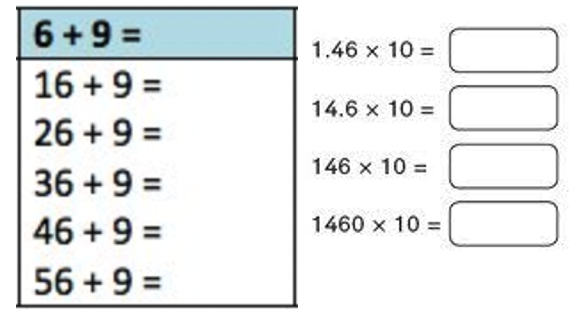
Our maths curriculum develops fluency through a sequential progression in calculation strategies, with written methods complementing mental methods. Fluency is further developed by incorporating conceptual and procedural variation into our maths lessons.

Building fluent mathematicians increases pupil confidence, reduces anxiety and empowers children with the energy, attention and resilience to tackle more complex maths problems. Our Maths Mastery curriculum exposes pupils to increasingly sophisticated mathematical problems and develops their ability to reason and problem solve in a logical and sophisticated way, explaining and discussing their reasoning and representing their maths in a variety of ways.
Our maths curriculum is implemented through a challenge for all approach.